We Didn’t Manifest
Gen X Before Life Became Something To Manage

I’m Gen X. The generation that was happy the bomb didn’t fall.
It felt we grew up with endings. Nuclear drills. Ozone holes. Acid rain. The Cold War on the evening news. The sense that history could crack open at any moment.
No one told us to manifest our dream life.
We were just relieved to still have one.
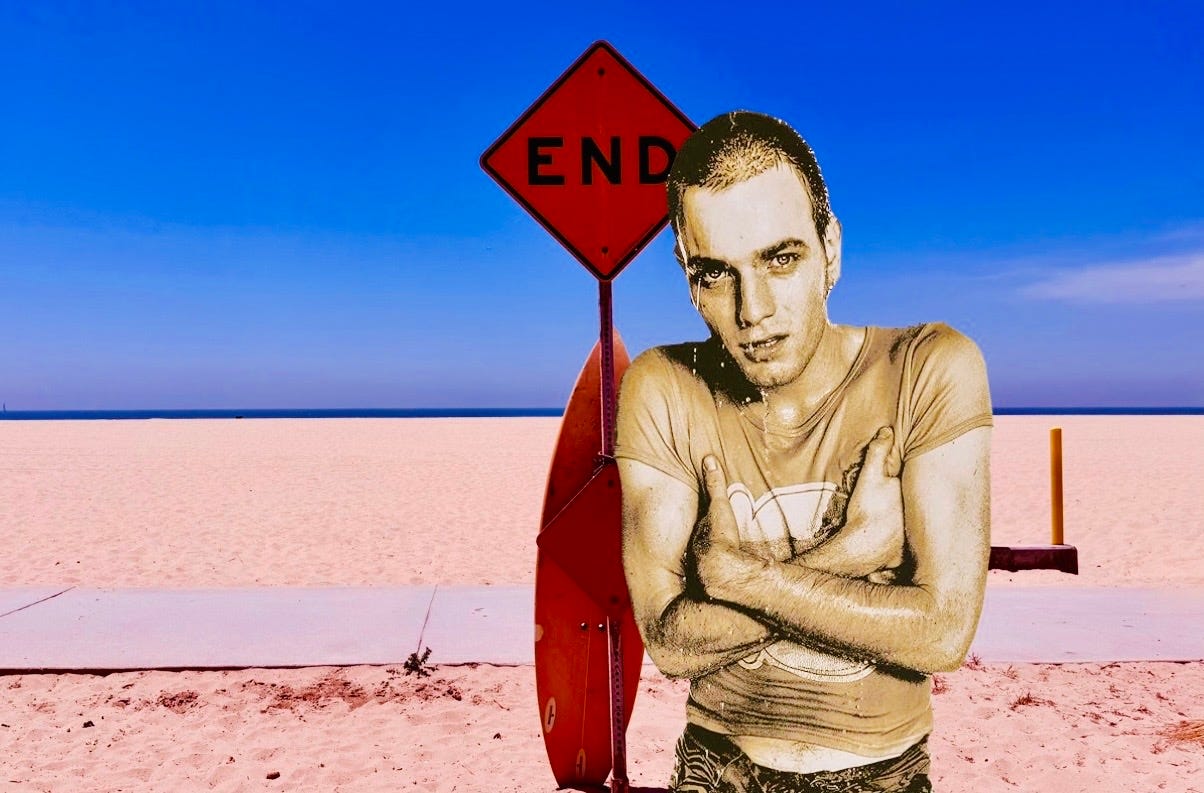
I’m not entirely sure what started this line of thinking.
Maybe it’s the way we talk about life now. About the future. About the self. About what a life is supposed to become. For Gen X growing up, the future wasn’t a promise. It felt fragile, which perhaps explains why we did a lot of hoping.
Hoping things would hold. Hoping there would still be work. Hoping we would have a life that was a little wider than the one we were born into. Hoping the world would stay standing long enough for us to build something inside it.
We Grew Up Inside Imperfection
When we came of age we watched Trainspotting and Beavis & Butt-Head. We listened to Nirvana and heroin chic defined our sense of fashion. Nobody talked about abundance or asked the universe for signs. Nobody made vision boards for their future selves. The dream was smaller and somehow big at the same time: find work you don’t hate, love someone decent, have enough. Try not to become your parents in every way you swore you wouldn’t. And if possible, make room for some joy.
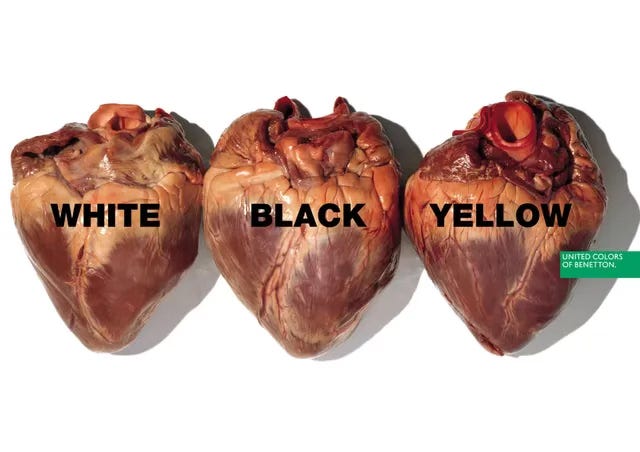
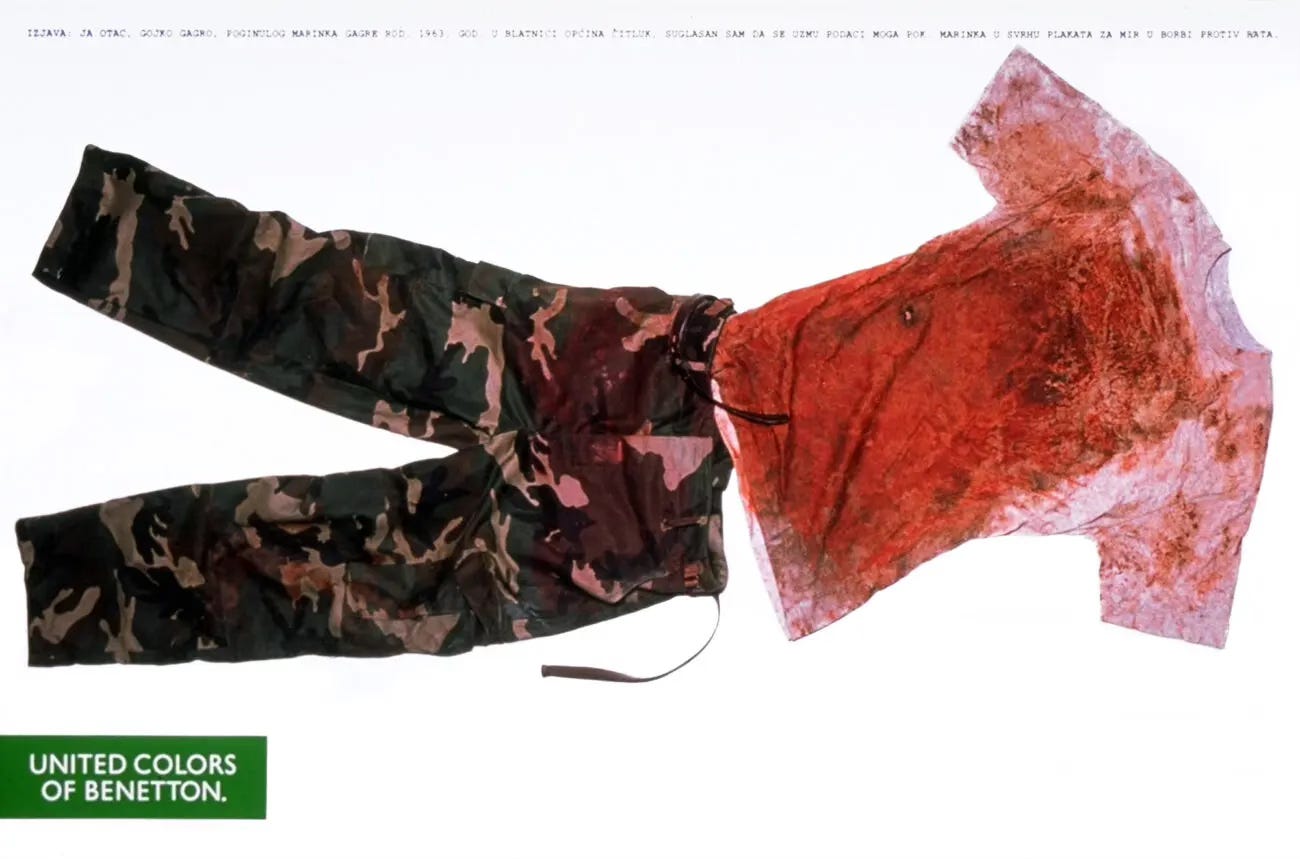
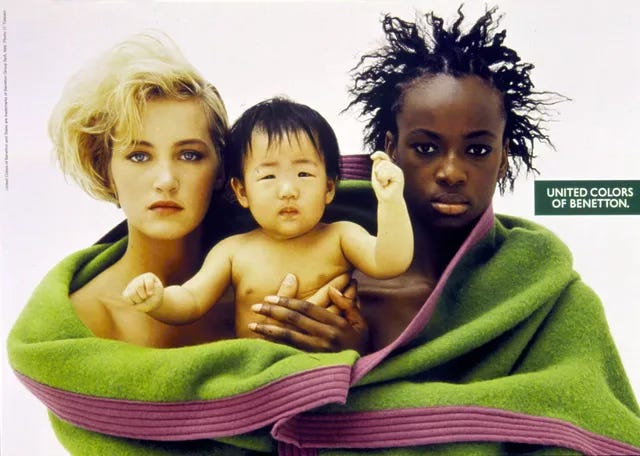
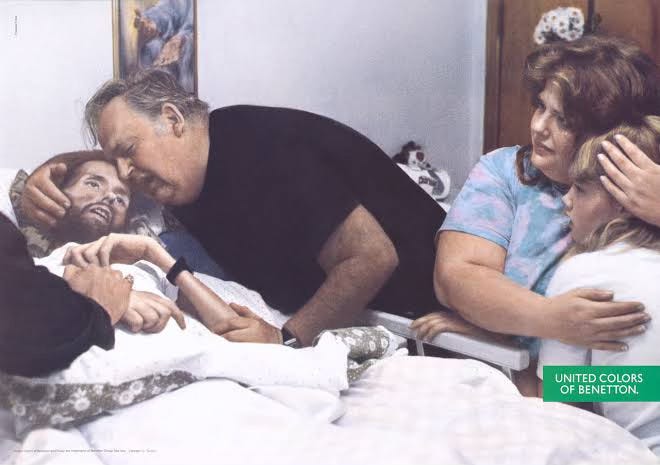
The campaigns by Oliviero Toscani for Benetton come to mind. They didn’t sell a perfected version of life. They didn’t show aspiration in the way we understand it now. No flawless bodies. No dream interiors. No curated happiness. They showed reality. War. Race. Illness. Conflict. Human beings as they actually were.
The message wasn’t: look at the life you could manifest.
It was: look at the world you live in.
Before Everything Became Optimization
We didn’t optimize, and if I remember correctly, we didn’t plan all that much either. Life was happening now. Not in the mindful, intentional, “be present” way we talk about today. We didn’t call it anything. We simply…were.
The future existed, but we weren’t constantly asking where we would be in five years. We were asking who was coming tonight. A summer evening could just be a summer evening, not something to turn into content. A walk was a walk. A conversation didn’t have to become an insight. A hobby didn’t need to become a business. You met people. Stayed out longer than intended, changed plans, got lost. All without a phone.
Maybe memory romanticizes things. It probably does.
Gen X had its own chaos. We drifted, avoided feelings, learned independence early and sometimes confused it with not needing anyone.
We came of age with a particular cultural script: “Choose life. Choose a job. Choose a career. Choose a family. Choose a big television…” The monologue from Trainspotting doesn’t so much introduce that worldview as press it into something flat and exposed, where its assumptions become hard to ignore. It feels both familiar and slightly distorted, like something you’ve heard in passing but never quite seen written out.
Life today feels different, in a way I still trying to name. Less like a script you inherit and more like a system you’re expected to actively manage. Heal the trauma, optimize the routine, build the brand, stay ahead of your own life.
But maybe this emerged for a reason. Younger generations inherited their own forms of instability: impossible housing markets, climate anxiety, debt, precarious work, a world that often feels economically and emotionally unsustainable. The difference isn’t the presence of instability, but the language available to respond to it.
It feels like every generation develops its own survival strategy. And underneath all of it sits a strange contradiction: people are encouraged to believe endlessly in possibility while also feeling increasingly precarious, economically, socially, emotionally. The pressure to become someone coherent, improved, and continuously in progress exists alongside the fear that everything could still fall apart.
A City Built on Hope
That contradiction, instability on one side, hope on the other, is something I also recognise in LA. It’s a city built around those same tensions. There are extraordinarily successful people, and there are others living out of cars, in tents, or sleeping on benches at bus stops. The sky feels within reach, and the abyss is just as real.
In that sense, LA also has a strong culture of hope. You see it in the obsession with reinvention, in spiritual practices, in manifestation, in the belief that life can still become something else. People hold onto those ideas because the realities around them can be brutal. Especially now, daily life confronts you with moral and emotional questions about who you are, what you value, and how you want to live.
Hope As Survival
I think holding on to hope is something most generations come to understand in their own way. We grew up in a world shaped by uncertainty and broken promises. Later generations inherited their own versions of it. Different pressures, different instabilities, different ways of naming the same unease. And yet something remains. Sometimes quietly, sometimes ironically, sometimes as optimization or manifestation, but stubbornly nonetheless.
Hope doesn’t disappear.
It just changes shape.