Somebody Somewhere Else
On Clowning, Book Clubs, and The Loss of Being a Regular Somewhere

There was a blow-up doll on stage. And at some point there was a banana.
I didn’t understand what I was looking at. I also didn’t know how to relate to it.
Last year I went to a clowning show in LA.
The LA underground clowning scene turned out not to be clowning in the familiar sense. No red noses. No floppy shoes. No fixed idea of what was supposed to happen next. What I was watching felt closer to improvisation, something constantly shifting as you watched it.
At first, I kept trying to understand it. To interpret it correctly. But at a certain point I realized the performance was not asking to be decoded.
Something else was happening.
The room, the performer, the audience, the hesitation, the laughter, all of it depended on something unfolding in real time between people sharing the same space. The performer’s vulnerability was not protected by irony or distance. And the audience response was not just reaction, but participation in a live encounter that could not be fully prepared beforehand.
Only later did I start to understand that this said something about what people seem to want from performance now.
Many performers in these spaces come out of acting or improv backgrounds, worlds shaped by auditioning, self-presentation, and constant evaluation. Clowning moves in a different direction. It privileges responsiveness over polish, presence over control. What matters is how people in the room respond in the moment.
Recently, the LA clowning scene has started receiving media attention, partly because of Connor Storrie. A New York Magazine article described it as “grunge in the ’90s,” “The Beatles in Hamburg,” and “the Greenwich Village that gave us Bob Dylan.”
What struck me most about that performance was not the style itself, but how much it depended on unmediated contact.
Once I noticed it there, I started seeing related impulses elsewhere, in quieter forms.
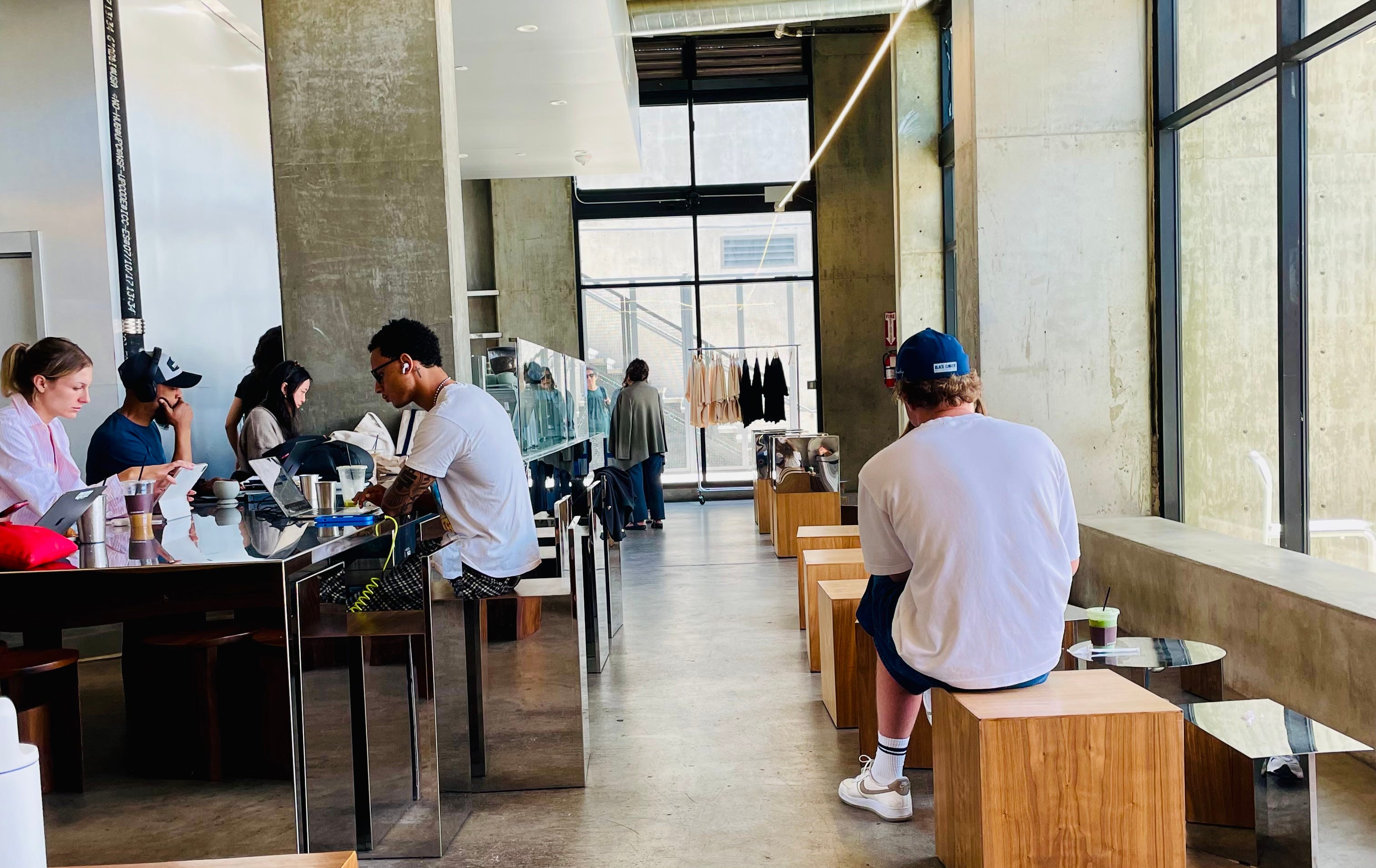
Book clubs that meet once a month. Board game nights where the same people return again and again. Jazz evenings organized around listening rather than networking. Vinyl nights structured by slowness and shared attention.
None of these spaces are organized around visibility. They are not staged for content, performance, or circulation online. Their value is not what can be displayed afterward.
What connects these spaces to that clowning room is not style, aesthetics, or subculture, but the attempt to recover forms of contact that have gone missing.
More and more of life now feels arranged in advance. You move through reservations, recommendations, apps, feeds, curated lists of where to go and what to like. You can spend an entire day moving between people and places without anything actually touching you.
In that environment, what disappears is not connection itself, but the conditions under which it takes shape between people.
Clowning responds to this through immediacy and exposure. It forces contact into the room. Nothing can replace being there while it is happening.
The quieter spaces respond differently. They rely less on intensity than repetition. Meaning accumulates through return.
Not being seen all at once, but being seen again.
Moving from Amsterdam to LA, I noticed how much everyday recognition depends on repetition built into the physical structure of a city.
In Amsterdam, density creates accidental continuity. The same streets. The same cafés. The same faces appearing often enough that familiarity emerges without effort.
A café where someone starts recognizing you, someone remembers your order. A bookstore where your presence becomes slightly expected. Small continuities that exist only because you chose the same place more than once. Not belonging in any grand sense. Something quieter than that. Being a regular somewhere. And increasingly, that small threshold feels significant.
In a city as large and spread out as LA, that repetition has to be created deliberately. You have to return on purpose. And that changes social life in ways that are hard to notice until you experience their absence.
Clowning, book clubs, listening nights, and the café you keep returning to don’t offer the same thing. What they share, though, is a response to the same condition: contact between people has become less immediate and less sustained.
That is why these spaces matter: they offer the conditions for people to become present to one another again.
Another piece this week…
I’ve been thinking about what changes when ambition is no longer assumed to stay small.
In the same orbit…
My friend Catherine (Catsendslove), who is a soft clown and took me to the clowning show, just wrote this essay: Part-time clown, full-time fool.