LA at Two Speeds
Walking, Driving, and How Movement Shapes Perception of The City

In a moment when cities are being reimagined around walkability and “living locally,” Los Angeles sits in a particular tension: one of the most car-shaped environments in the United States, and at the same time, one of its most physically engaged landscapes. Walking through LA can feel almost impossible. Yet it sustains a strong walking culture. It is just called hiking.
A City Built For Cars
LA is not structured around walking. Distances are large, intersections are designed for cars, and most daily life assumes a vehicle. You do not move through LA. You drive through it.
You leave a place, enter a car, cross stretches of infrastructure, and arrive somewhere else that is also accessed by car. The city is organized around transitions between interiors rather than continuous presence in space. But driving is not only a transportation system. It is also a way of filtering experience.
Inside a car, Los Angeles becomes a sequence rather than a place. Space flattens into distance. Distance resolves into time. Twenty minutes. Forty minutes. An hour and fifteen. Neighborhoods blur into one another through motion rather than contact. You register scale, but not texture. The city is visible, but always slightly removed.
Walking Against The Flow
For a long time, I resisted living like that. I like staying in contact with the ground, moving through distance at the speed of my body rather than through machinery, feeling that you do not just move through the city, but that the city also moves through you.
For the first seven years I lived in LA, I did not have a car. I took Ubers when I had to, but mostly I walked. A lot.
The first thing you notice when you try to walk in LA is not distance. It is dissonance. You are slightly out of sync with how the city is designed to be experienced. Sidewalks appear and disappear. Roads stretch without shade or rhythm. Streets feel empty in a way that reflects how fully movement has been absorbed by cars.
Hiking as Walking Culture
Walking is not absent in Los Angeles. It has been displaced into elevation. It reappears as hiking.
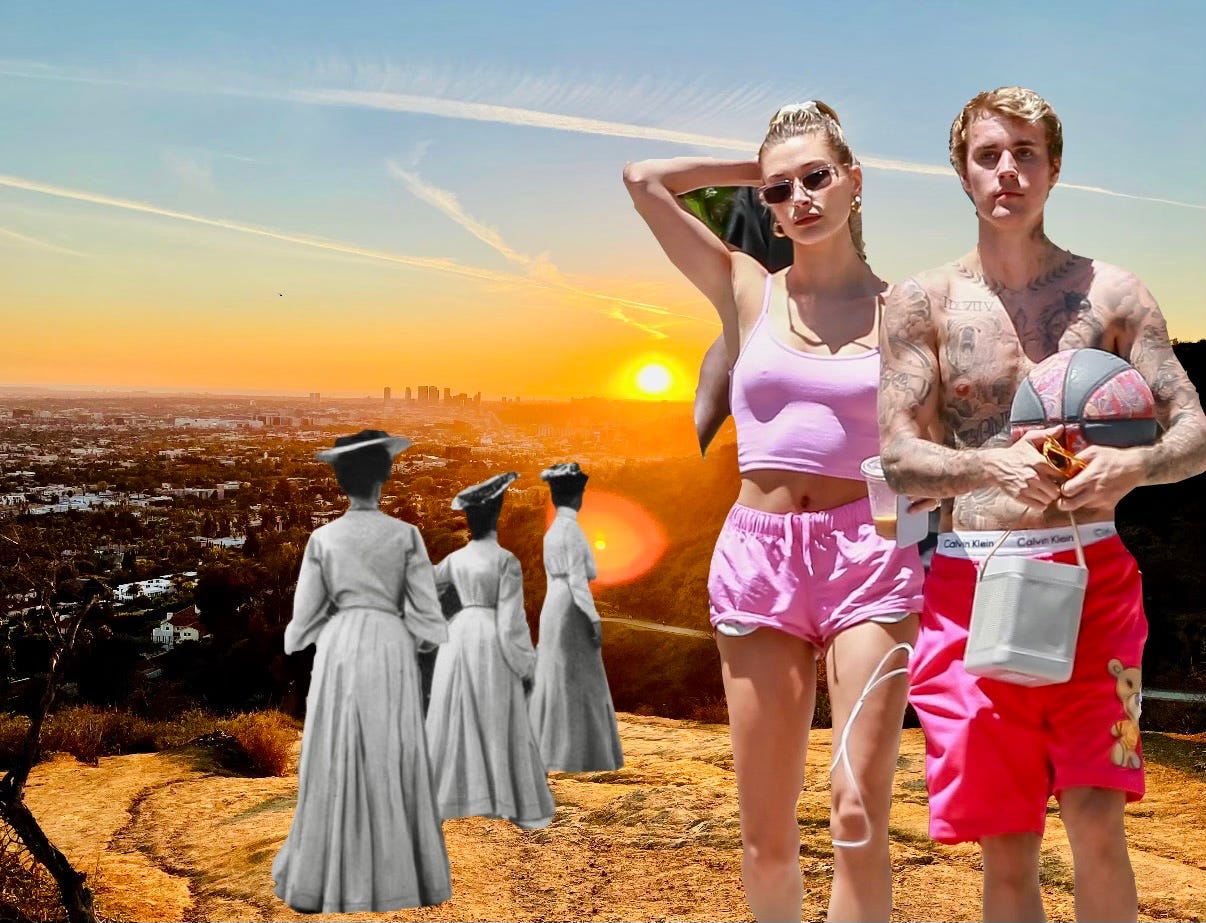
Runyon Canyon and Griffith Park sit close to the city and even closer to its mythology, already familiar through film, television, and the occasional trace of celebrity visibility. They function less as escapes than as re-entries: ways of accessing the same place at a different speed.
On those trails, perception reorganizes itself. You notice incline instead of distance. Your breathing becomes part of how space is measured. Heat is no longer background but pressure. Sound sharpens: gravel, wind, insects, footsteps. The body is no longer buffered by infrastructure. It is in direct contact with terrain.
The city becomes immediate again. Not as image. Not as idea. But as physical presence.
Two Modes of Perception
This is why hiking in LA carries a different weight than it might elsewhere. It is often framed as lifestyle or wellness, but its role in the city is structural. LA evolved alongside a geography that never fully receded. As the city expanded across the basin, the nearby mountain ranges, the Santa Monicas and the San Gabriels, remained unusually close. Early rail lines, access roads, and mountain resorts connected urban life to elevation long before the metropolis fully sprawled outward.
So LA grew in two directions at once. Outward into infrastructure, upward into landscape. Both remain active. One is built for insulation, the other for connection.
Driving and Perception
In LA there are two ways of perceiving the same city. One is mediated through speed, glass, and distance. The other is produced through friction, effort, and movement. You can spend hours inside traffic feeling detached from the city around you, then climb into the hills and suddenly feel entirely inside it.
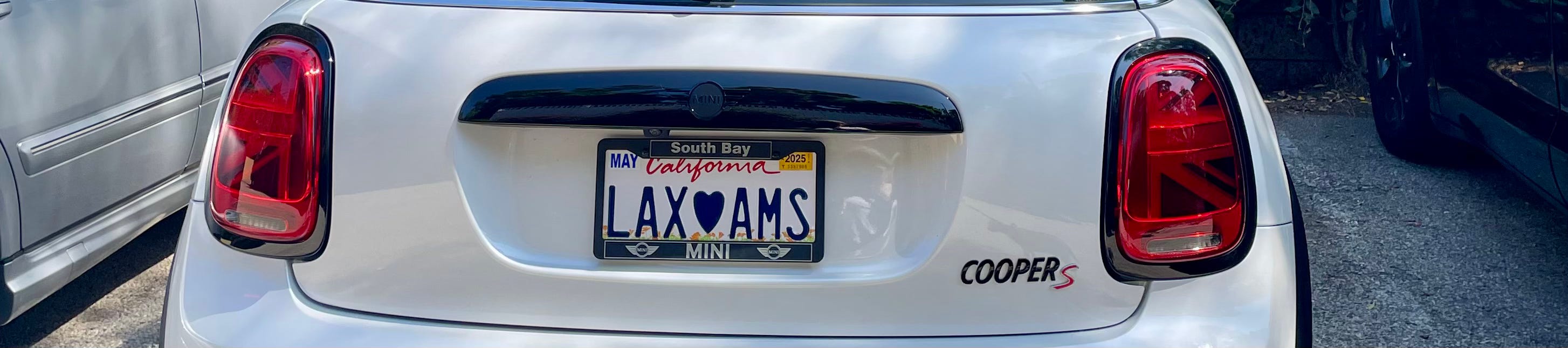
Two years ago, I got my driver’s license. I did not expect to enjoy driving in LA, but I do. There is a particular clarity to it: the long stretches of movement, the way the city appears in fragments through the windshield, the conversion of distance into rhythm. LA is a place where the same geography produces two radically different forms of experience.
I still walk, I still hike. And I drive.